Diversity in Children’s Books
some thoughts

Diversity in Children’s Books
Last month I was invited by CILIP to be on a panel to talk about ‘diverse books’ at an event in Brixton Library. I have been thinking more and more about the discussion since. Because at the very same time as this discussion was happening, in my hometown of Dublin, a Congolese man, Yves Sakila, was murdered by security guards on a busy street outside one of the city’s best known department stores. The following day a large protest organised by Tommy Robinson and the far-right was taking place in the centre of London, I joined the counter protest. In the last few days there have been racist anti-migrant right-wing riots in Ireland. The powerful things that fellow authors Patrice Lawrence and Ken Wilson-Max said that day in the context of the subsequent recent events made me want to put down my thoughts. I have expanded the answers which I gave that day into the text below.
Why is it Important to Ensure that the Publishing Industry Continues to Champion Diversity in Children’s Books?
Discussion with Patrice Lawrence / Ken Wilson-Max / Chris Haughton
I think the way we frame these questions is wrong. ‘Continues to champion diversity’ makes it sound like the people who work in publishing are acting generously towards minorities. We often frame these diversity discussions wrongly in my opinion. We talk about ‘Black History Month’ as if black history is somehow removed from our shared history. It is not. If someone from the right-wing was engaging with these discussions they might be forgiven for thinking that we as an industry are acting against our own interests in order to foreground diverse books. That is simply not true. And in fact the reality couldn’t be further from the truth.
We need to step back and frame these issues differently. The reality is this: the history we are taught is completely wrong. This entire country, and indeed the entire continent of Europe, was largely built off the backs of others. The contributions of ethnic minorities around the world have been systematically diminished, but so has the working class, and women and others. We as an industry have a role in this burying of history.
Look at the world: India, China, Australia, New Zealand, South Africa, North and South America. Look at the Middle East. Look at Israel. Everywhere we Europeans have gone there has been war, slavery and genocide. But this isn’t acknowledged. Instead we Europeans have for centuries been claiming that we are the ones bringing light and democracy to the world. The magnitude of this deception really cannot be overstated. It has shaped the modern world.
Most of the world knows this, certainly most of the global south does. But within Britain and the western world these histories are misrepresented. How do they manage it? By owning the media, owning the institutions and owning the publishing industry. Look at the building we are sitting in now, the Brixton Library is officially the ‘Brixton Tate Library’ and has a statue of the sugar merchant Henry Tate outside it. Many of our cultural institutions have a similar history. The British Library, The British Museum, both of these collections were founded by Hans Sloane. The V&A history is similar, the Tate, again is named after Henry Tate. Everywhere we look it is sugar, slavery, colonisation.
The publishing industry has had an outsize role in all this. History books are written by the victors. We as educated readers and writers, librarians and educators have a responsibility to be doing everything we can to understand this and seek out the other sides to tell a more objective history. Unless we acknowledge that as the baseline, we are not helping any sort of honest public understanding by talking about ‘diversity’ issues. We are doing a disservice to history and critical thinking and to our understanding of the world.
This is what is at the core of my book ‘The History of Information’. I can’t summarise it all here, but to show the extent of history is misrepresented, I want to focus on one part of the story. That of Nazi Germany, because their violence is familiar to us. After WW2, Germany was forced to reckon with its history. But the rest of Europe has never had that reckoning. The Nazis perpetrated horrific crimes. But what they did was not the total aberration it is made out to be. Their hateful ideology was, sadly, simply an outgrowth of the racist European ideology of the time and it fits in closely with what europeans have been doing all over the world for centuries.
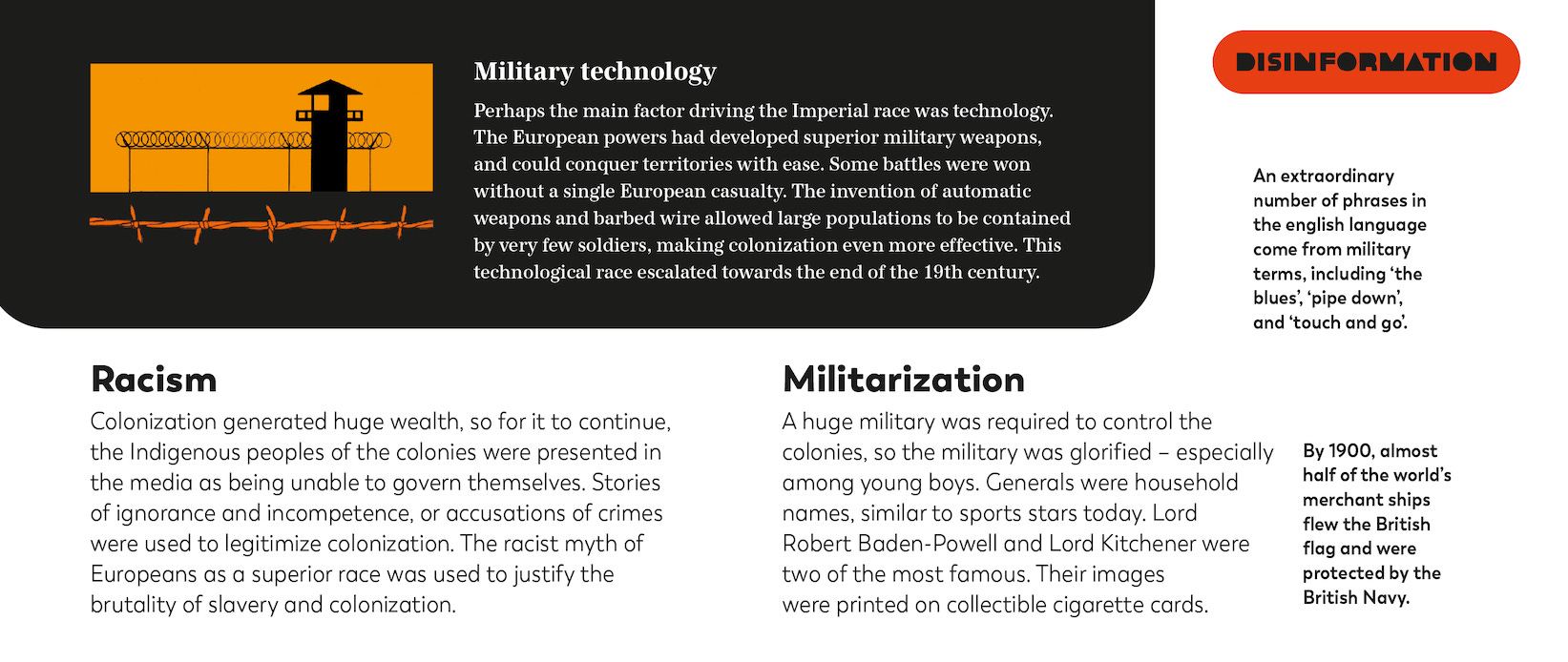
Concentration camps are the images we most associate with the Nazis. But they were not invented in Germany, they were being developed by the British long before that all around the world. At the turn of the twentieth century these camps were being used to house hundreds of thousands of people in the Boer War in South Africa. Indeed, the first concentration camp that the Nazis built, Dachau, was a direct copy of a British camp, Frongoch in Wales. Frongoch was built during the first world war to house prisoners of the war as well as political prisoners including Irishman Michael Collins and some Suffragettes. With its barbed wire fences and high guard towers it became the prototype for not just Dachau but all the subsequent Nazi internment camps.
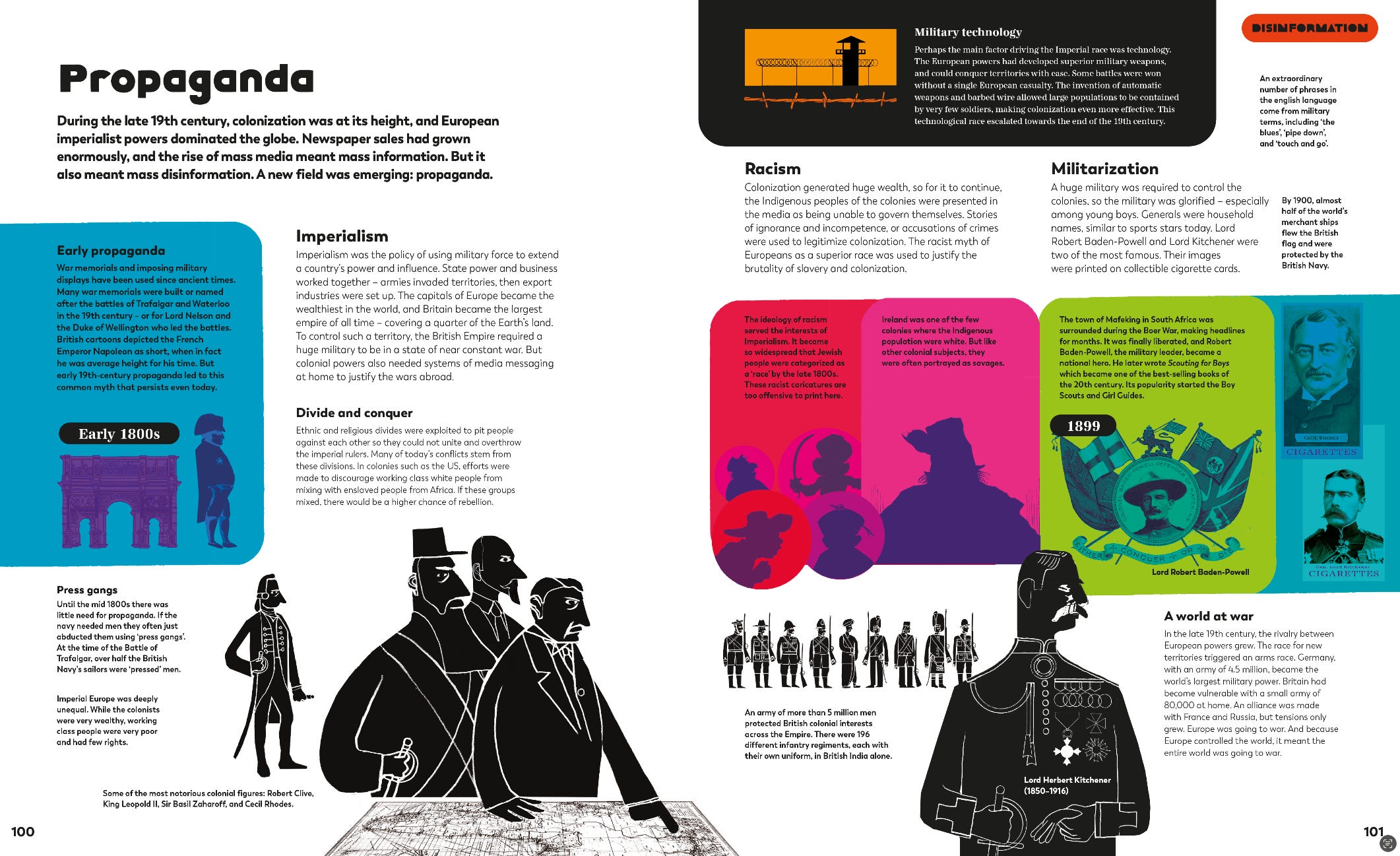
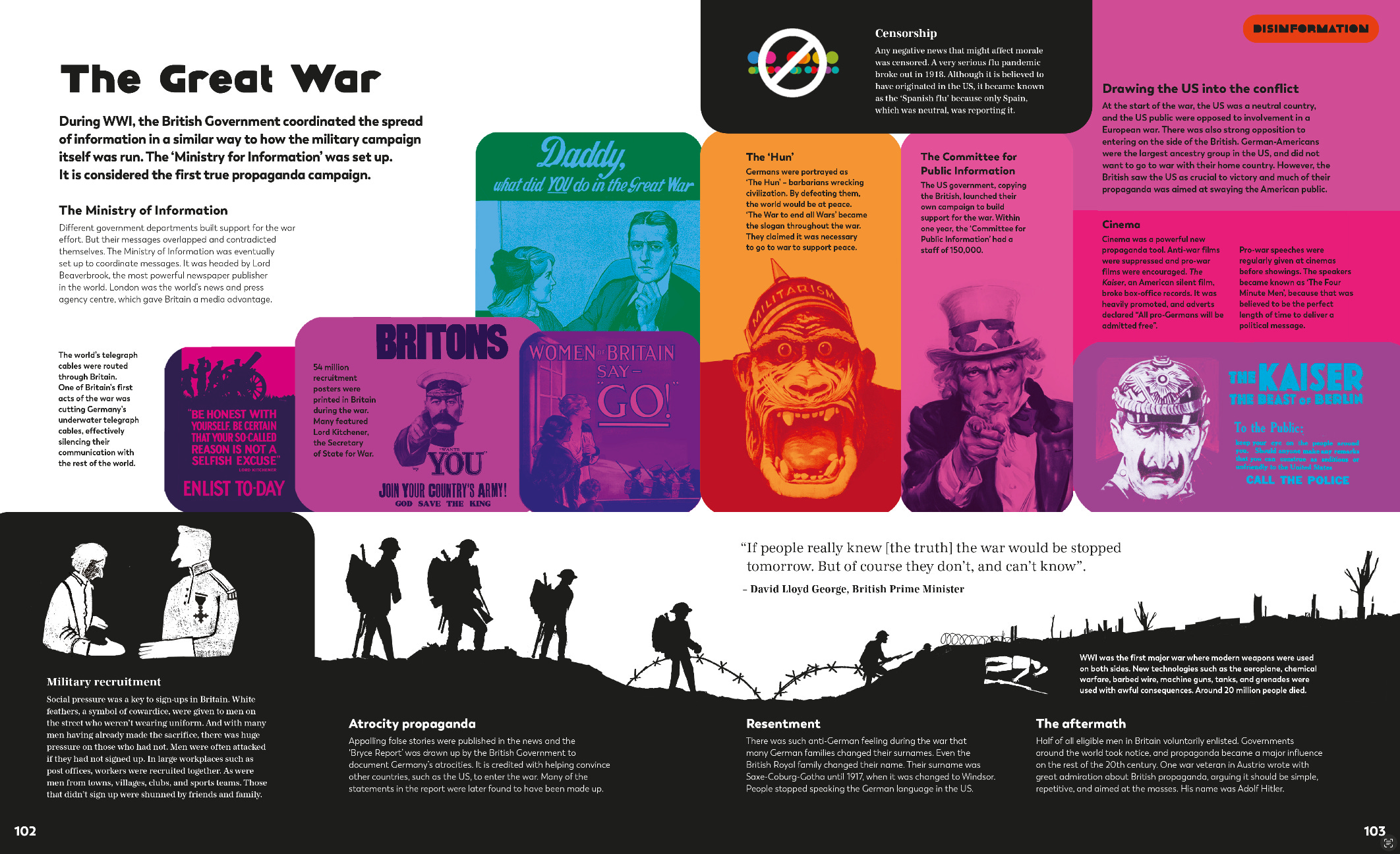
Likewise the propaganda. Britain had pioneered methods of mass persuasion to maintain the empire, this consolidated during WW1 with the founding of the ‘Ministry for Information’ which is the prototype for propaganda messaging in the emerging mass media ecosystem. Hitler openly admired British propaganda and wrote about it extensively in his book Mein Kampf arguing that messages should copy the British models, that it should always be simple, repetitive, and aimed at the masses and that audacious ‘big lies’ bypass our critical thinking more effectively than minor deceptions.
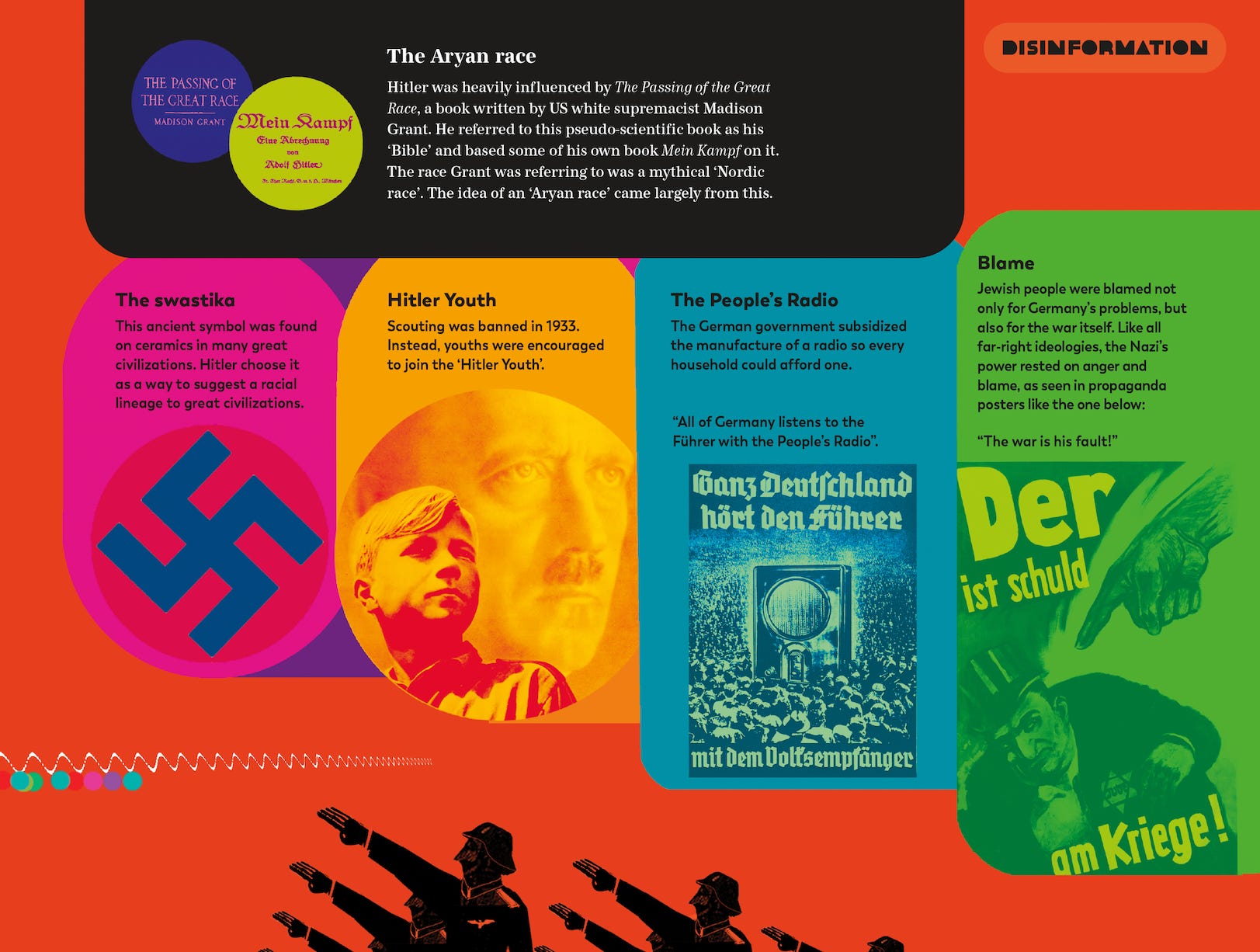
Hitler was also heavily influenced by British and American racist ideology. Particularly the pseudoscientific book ‘The Passing of the Great Race’ by US white supremacist Madison Grant. After reading it, Hitler sent Grant a letter declaring, “This book is my Bible” It was the first book published by the Nazi Party after they took power and it was held as core to their ideology. Hitler based so much of Mein Kampf on it that many considered it to be plagiarism. The ‘race’ Grant was referring to was a mythical ‘Nordic Race’. Hitler’s ‘Aryan Race’ came largely from this.
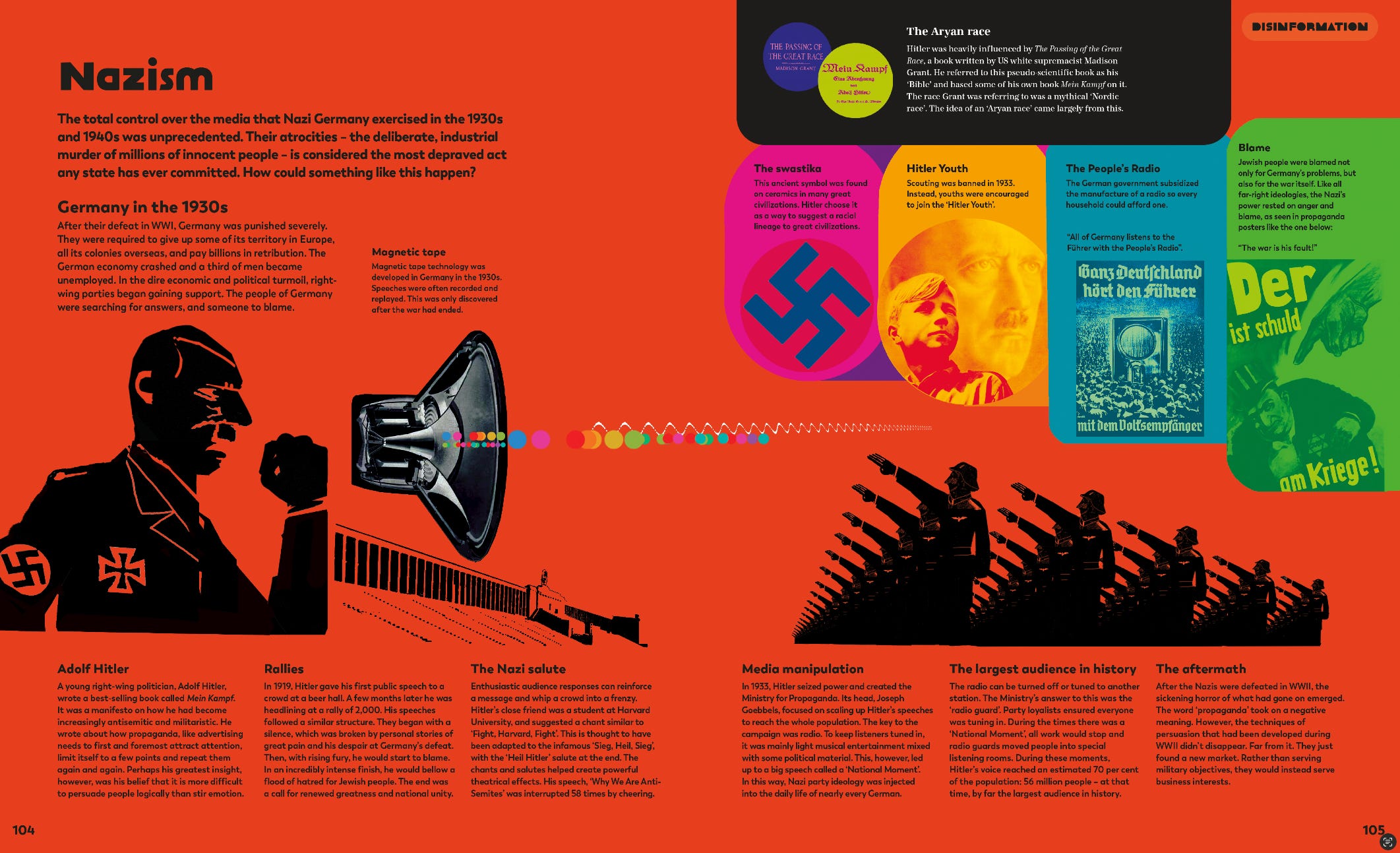
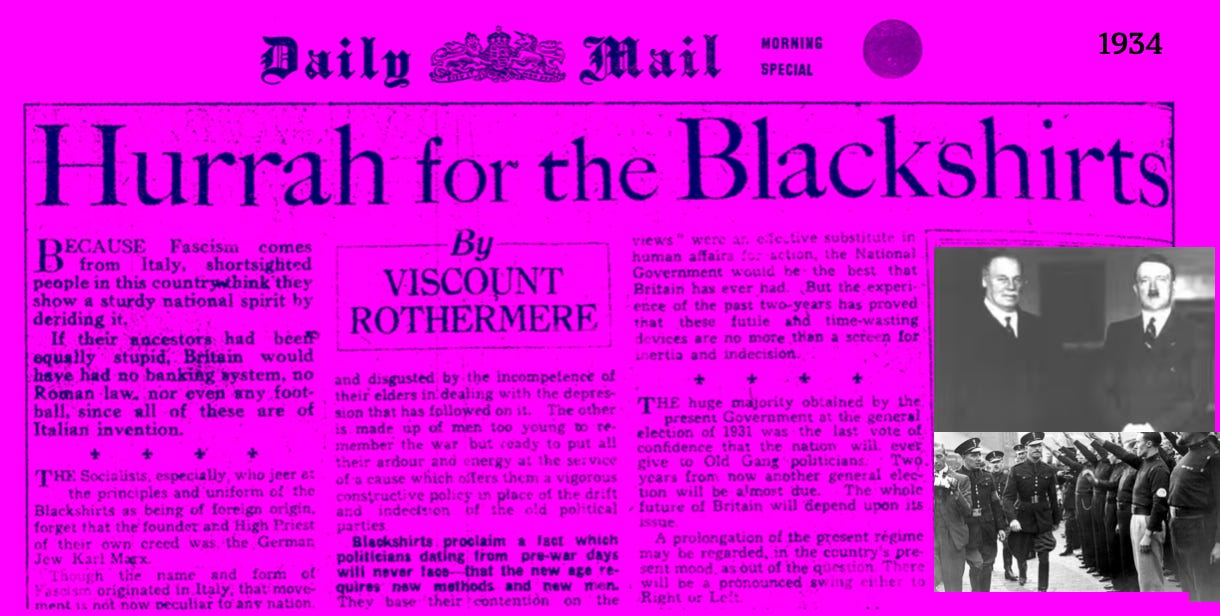
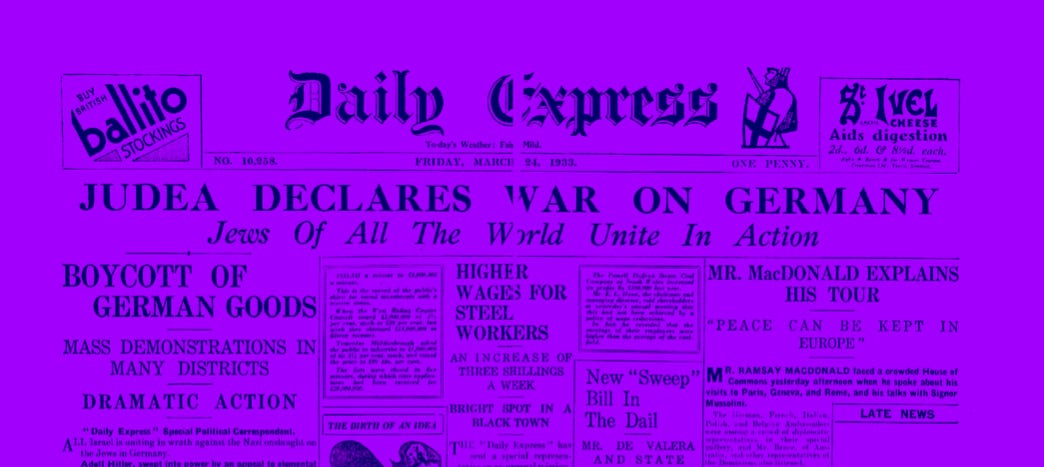
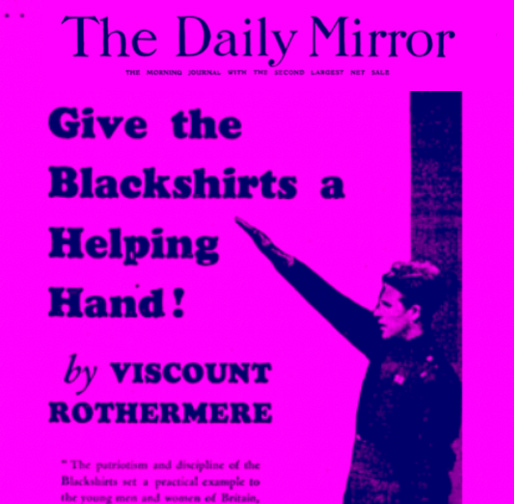
You might also be surprised to know that Fascism was, for the most part, celebrated in the press throughout the 1920s and 30s across the western world. Many UK and US papers credited Mussolini with “saving Italy from the far left and revitalising its economy”. The Saturday Evening Post serialised his autobiography in 1928. Viscount Rothermere, owner of Britain’s Daily Mail, the world’s most popular newspaper at the time, was, along with many of the press barons, a vocal supporter of Hitler. When they saw that the Nazis were crushing unions and allowing capital free reign, huge investments flooded in from the US and the rest of Europe which supercharged the German economy. This only changed when the Nazis began threatening these interests with expansionist wars. Nevertheless many American companies such as IBM, General Motors and Ford were active collaborators with the Nazi regime all throughout the war.
The harsh punitive measures placed on the German people by the Allies after WW1 is also underplayed. After the Treaty of Versailles a second war was seen by many as an inevitability. In 1919 Ferdinand Foch, the Supreme Allied Commander said “This is not peace. It is an armistice for twenty years.” He was exactly right. WW2 began in 1939, exactly 20 years later. The British Prime Minister David Lloyd George made a very similar prediction, he said “We shall have to fight another war all over again in 25 years”. He was only five years off. These two figures were two of the most powerful political figures of their time. The ability to predict the war so accurately raises questions about who is really to blame for the rise of the Nazis.
What the Nazis did was horrific. We should be doing absolutely everything in our power to never let it happen again. That means looking closely and honestly at history. So why aren’t these things being discussed? When I give talks on my book, with facts like these, people often tell me they are surprised that they haven’t heard of these things before. This information has been hidden from us. Our entire telling of history is, in many cases, completely upside down.
When I was in school I never really liked studying history, and that is true for many children. It has a reputation for being boring. But how can the study of everything thats ever happened be boring? Its almost like its been designed that way. We focus on irrelevant details. Facts about various kings and queens and treaties and events that have no impact whatsoever on the modern world. We rarely focus on the bigger picture. The whys. Why is it that we had kings and queens at all? Why then all of a sudden did we abandon them and shift to democracies? Why did religions dominate society all around the world in medieval times? Why is society dominated by men? These are the interesting questions that never get asked. Power structures, social movements and economic systems.
When I go to schools and discuss my book with children, their teachers always say their engagement is so striking. The children are genuinely fascinated and we have very lively discussions. They don’t want them to end when the bell rings.
I think I would have loved history if it was presented in this way. But asking these questions undermines authority and challenges the status quo. It shows us that the things do not need to be this way. The reality is the powerful people in society can only hold on to power if they have control over information. Control over information means control over history. This has been true of every era from the dawn of civilisation until now, from Ancient Egypt and Ancient China, to Medieval Europe, to the modern world. Its how its always been, and its how it is today.
That is why I wanted to write my book. But it was only ever intended as a jumping off point. I hope people use it as a way to question history, to see what is information and what is disinformation, but then to discover the many, many books that tell history from the other sides. The mainstream narratives only tell one side, to know the full story we need to seek out the silenced voices. It is only by actively trying to counter the asymmetry of the media can we hope to get any grasp on the truth. Ignorance of history isn’t just something that affects minorities, it affects us all. It is what brought us to where we are today, with Brexit, Trump, Reform and Farage.
Here are some of the books I mention in my book, or reference or ones that I recommend along with children’s versions and in some cases teachers workshop ideas. If anyone has other suggestions that might also be helpful to educators please let us know in the comments.
Thanks!
PATRIARCHY
The Creation of Patriarchy - Gerda Lerner
The Patriarchs - Angela Saini
COLONIALISM
Black and British - David Olusuga
Black and British for children
Empireland - Sathnam Sanghera
Stamped from the Beginning - Ibram X Kendi
Stamped. Racism, Antiracism and you (for children0
A People’s History of the United States - Howard Zinn
Young People’s History of the United States (for children)
I agree so much with what you have said here. I shamefully knew very little about the exploits of the British empire until adulthood.
Understanding British colonialism is so crucial to make sense of everything happening the world today, it should be at the top of the history curriculum in British schools and taught from a wide range of perspectives. Visiting secondary schools recently for my daughter, I was pretty shocked at the way they still teach subjects like The Crusades from such a colonial perspective. This is in an inner London state school!
Children’s books definitely should be filling in these cracks (or more like giant holes!) in the curriculum. I do have a fantastic book to recommend; it’s is called The History Book, written and illustrated by a group of Danish graduate students in the 1970s and translated into English published by a small press in the US. It is the history of the modern world and how it was shaped by imperialism, colonialism and capitalism. The whole book is available to view online, I’ll try to find you a link. I also have a physical copy I managed to get hold of, it is also beautifully illustrated. I would be very happy to show you some time. The books ends in the 1970s, there really needs to be a second and updated edition!
Your starting point about how "championing diversity" is a wrong-headed way to frame things is so spot on. So true that History continues to be taught for the benefit of the few.